SilverBone china BeeswaxReal shark
The thirty-first of October
All Hallows.
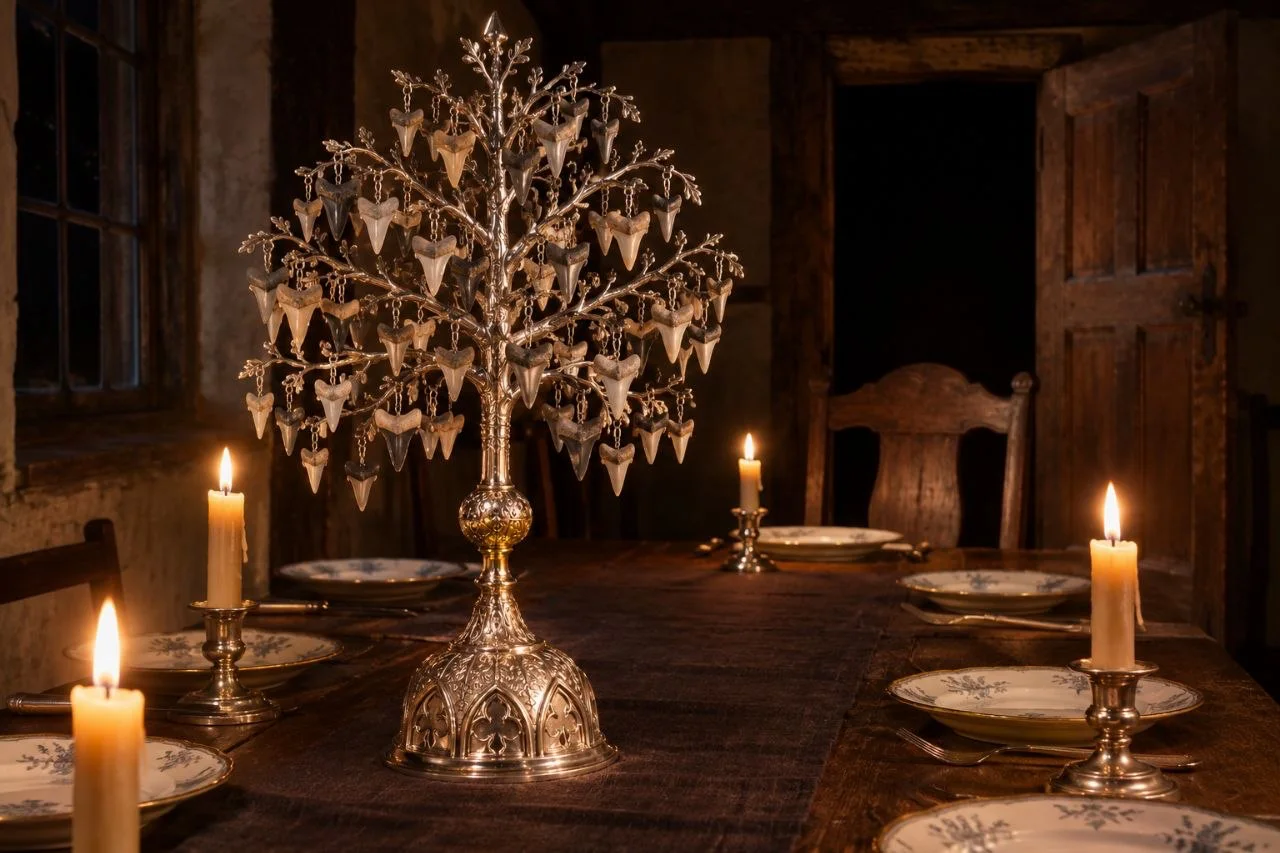
Everything else about tonight is pretending to be dead. This is having them over.
In Ireland and Scotland the dead were expected on this night. A place was laid for them at the table, the fire was left in, and the door stayed off the latch.
In the Appalachians and in parts of Britain there was a stricter version called the dumb supper, dumb as in silent. Nobody speaks. Everything is done backwards. One place is laid for somebody who isn’t there. At first it was for the husband a girl hoped to see. Now it is for somebody who has died. It is the same place.
We think that is the whole of the holiday, and that everything else came after it. So we made the table. It is sold one place at a time, because that is how you will need it.
Hallows ISilver, shark
The tree of tongues.
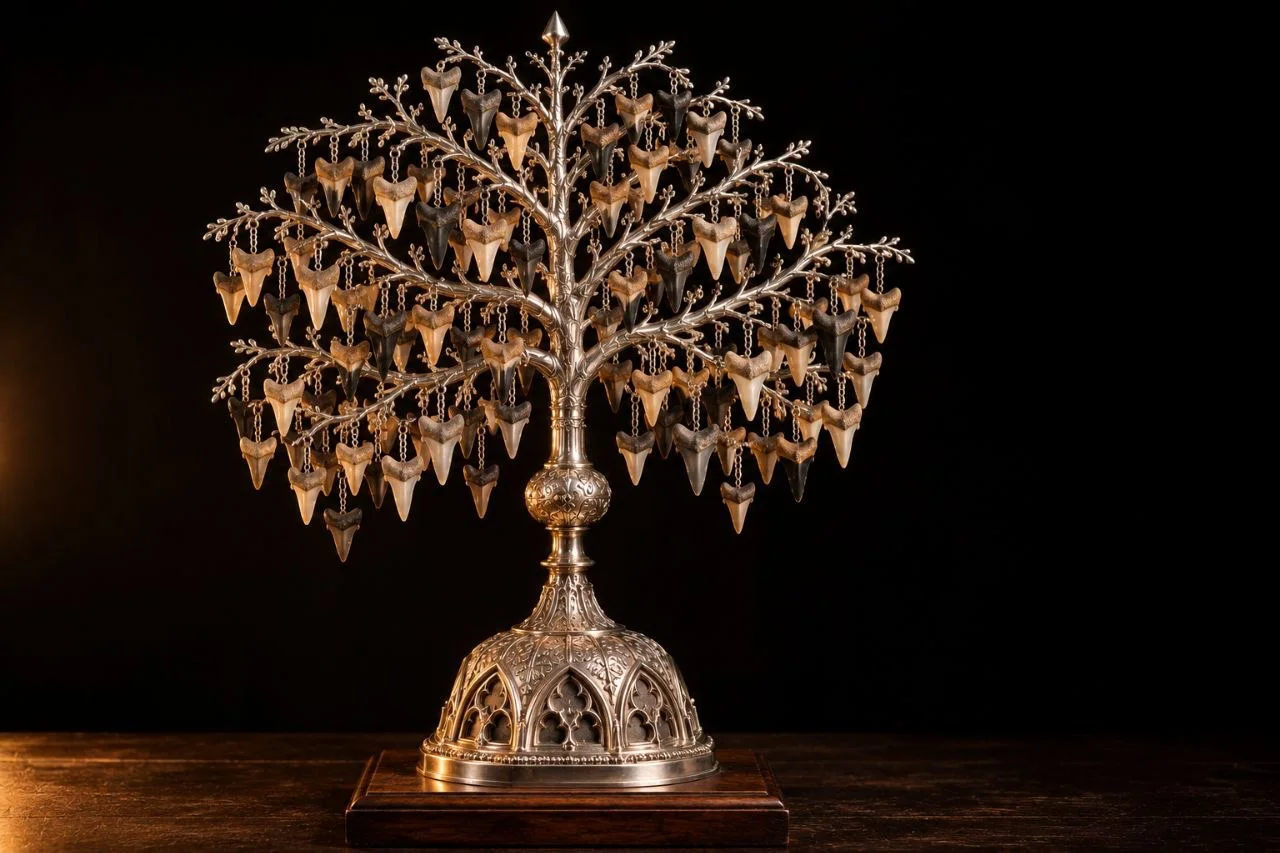
For about three hundred years the richest tables in Europe had a small tree on them, in silver or gold, hung with stone tongues. They were the tongues of snakes, turned to stone by Saint Paul, and they guarded the table against poison: you dipped one in your wine, and it sweated if there was something in it. The French called the thing a languier. There is one in Vienna from about 1450, in gilded silver, twenty-seven centimeters tall.
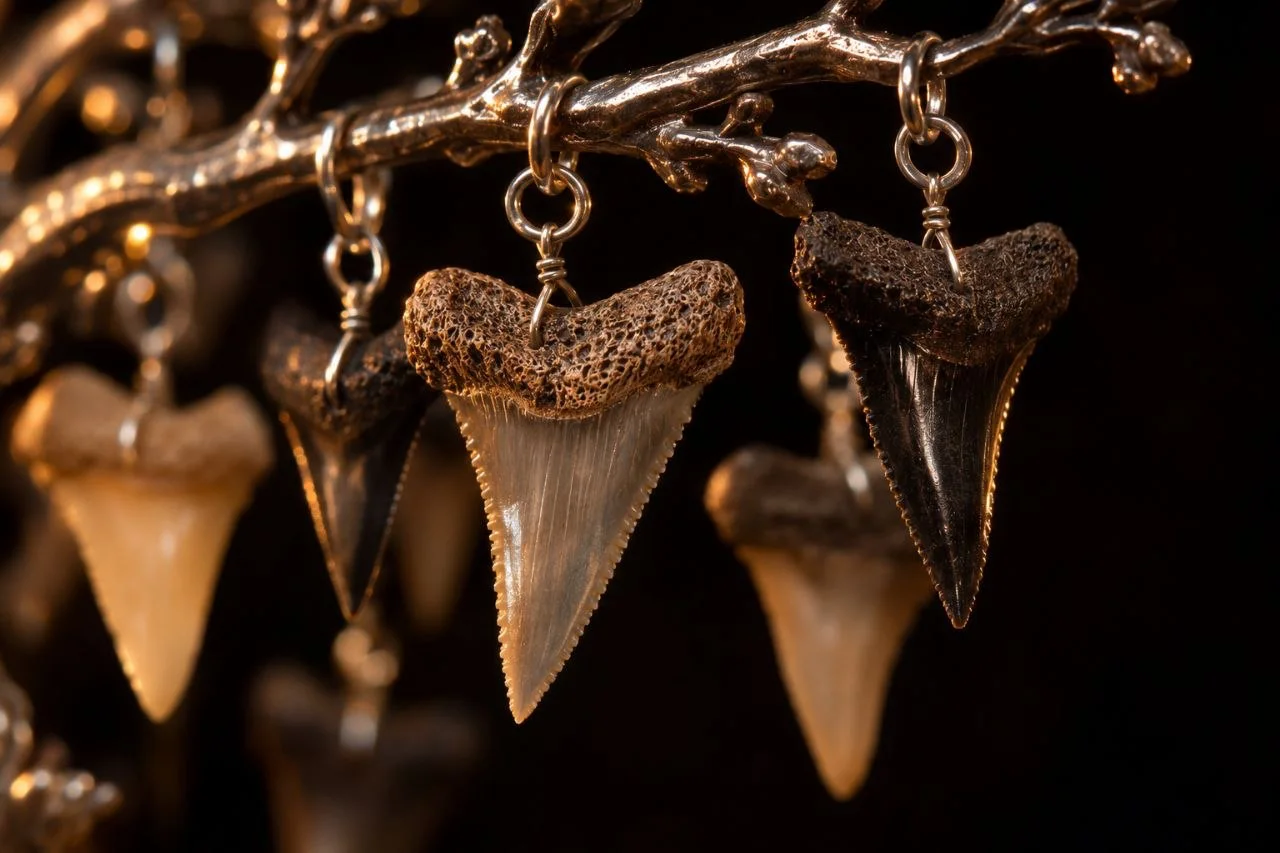
The tongues were shark teeth. Nobody knew.
This one is ours, and it is the only real shark this house has ever sold. Three hundred fossil teeth, about what a great white carries in its mouth at one time, hang from silver rings on silver branches. It stands in the middle of the table. It does not detect poison. It never did.
Each tooth hangs free, so it moves in a draught. You have left the door off the latch, so there will be one, and you will hear it.
- Tree
- Sterling silver, raised by hand · nineteen inches, forty-eight centimeters
- Teeth
- Three hundred, fossil, between two and fifty million years old. They died on their own.
- Foot
- Silver on a walnut plinth
- Edition
- Thirteen, for Stensen’s thirteen rows
- Takes
- A year. Order tonight and it is on your table next Halloween.
- With it
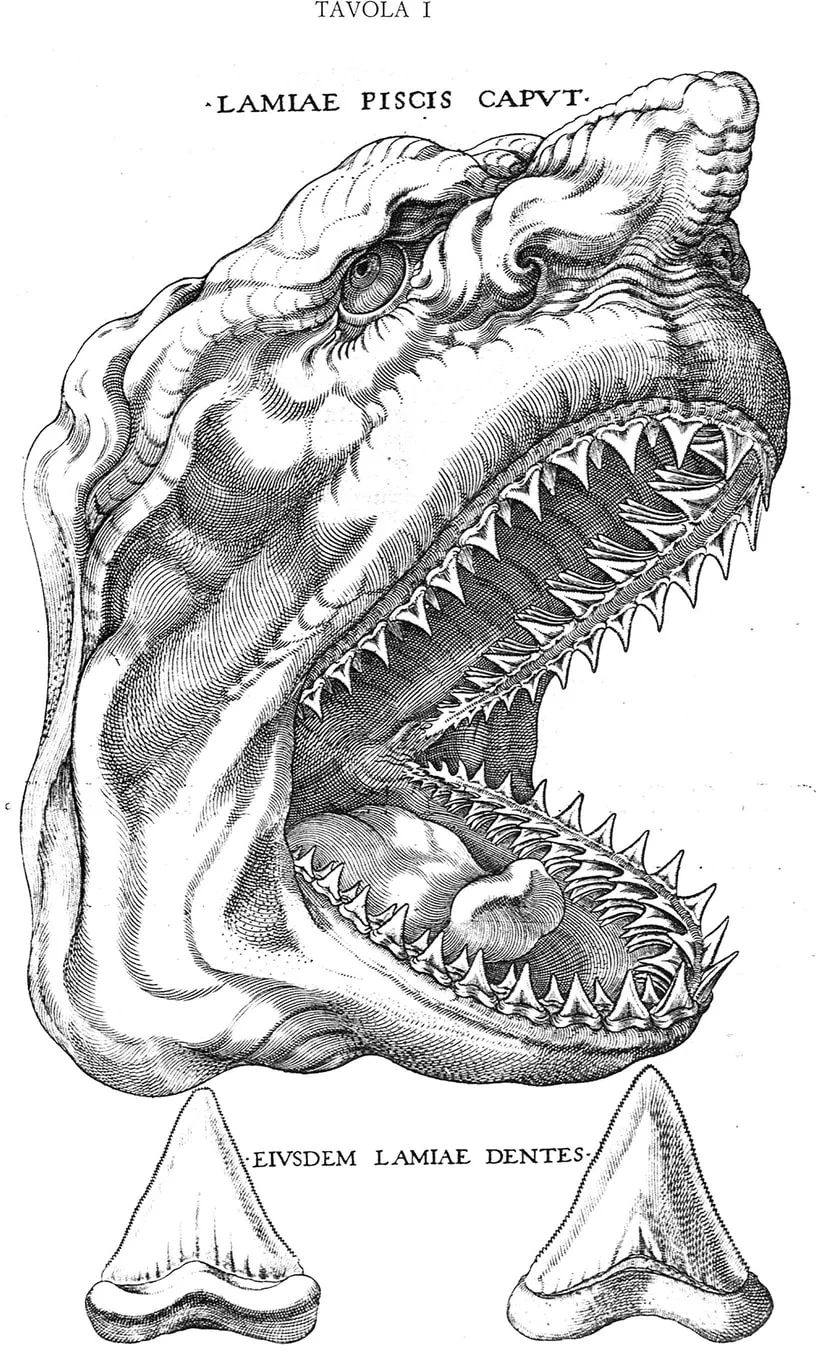
- The Head of a Shark Dissected, 1667, in Latin and in English
Know your enemy
October 1666.
Two fishermen caught an enormous shark off Livorno, and the Grand Duke of Tuscany had its head sent to his anatomist, a Dane of twenty-eight named Niels Stensen. He opened the mouth. He counted thirteen rows of teeth in each jaw, and he recognized them.
He published the next year, in Latin, under the title The Head of a Shark Dissected: the tongues on the rich men’s tables had come out of this fish. An Italian had said so fifty years before, and nobody had listened. Then Stensen had to explain how a tooth gets inside a rock, and in explaining it he founded geology.
Then he gave it all up. He became a priest and then a bishop, gave away what he had, and died in 1686. In 1988 the Pope beatified him. So as far as Rome is concerned he is in heaven, and the first of November is his feast too: the one man on that list who looked a shark in the mouth and counted.
Hallows IIBone china
The place.
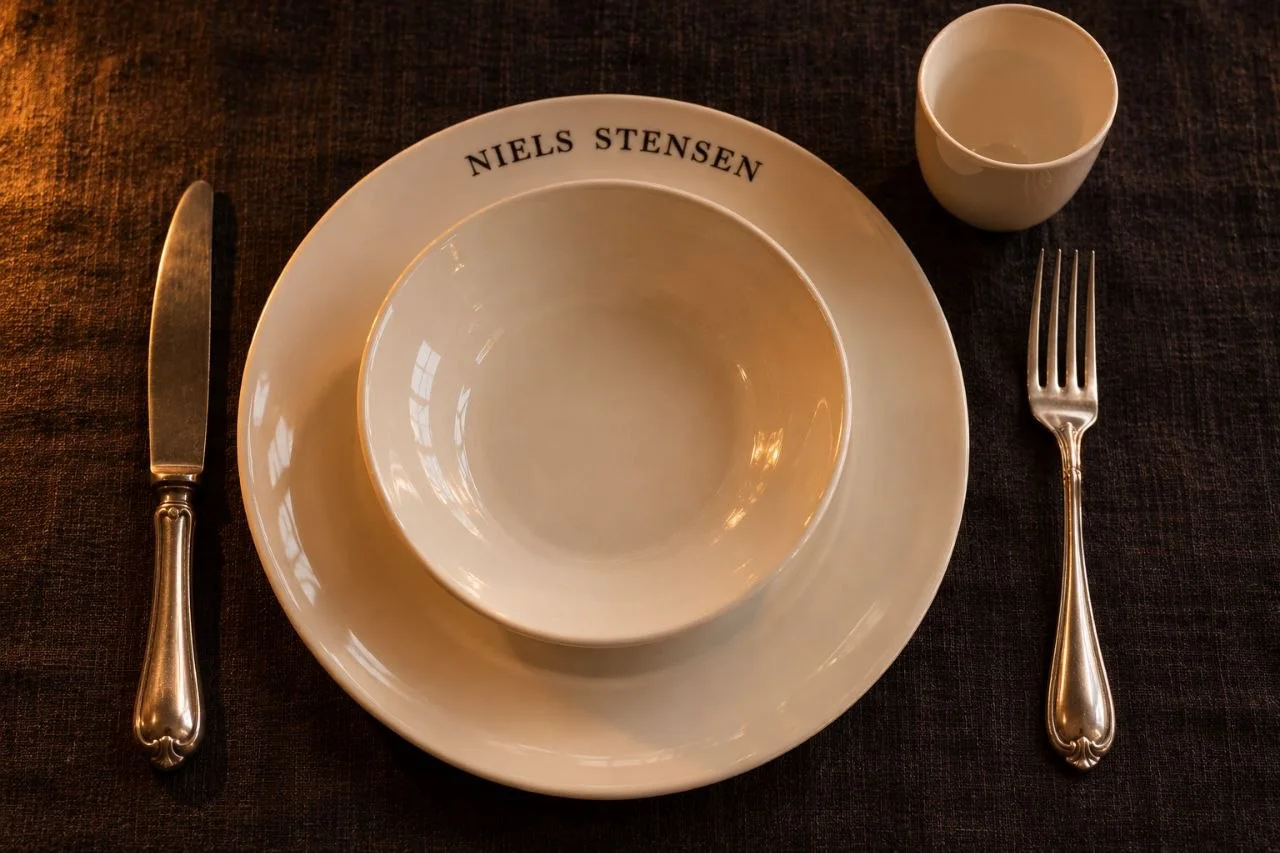
A plate, a bowl and a cup in bone china, white, with one person’s name fired into the rim in black. There is no other decoration. Nobody eats from it. You buy one for each person, when you need it, and the service grows as your life goes on.
Bone china takes its whiteness from bone. The old formula is half bone ash by weight, and the bone is cattle. It doesn’t have to be. Send us theirs and we will make the place with it. A person leaves about two kilos, which is four places, one for each house they are expected at.
- CattleThe usual way.
- TheirsTwo kilos by courier. What we don’t use comes back in the same box.
- Plate
- Ten and a half inches, twenty-seven centimeters
- Cup
- One measure
- Rim
- Their name, once, in the type on this page
- Sold
- One at a time
Hallows II, withWalnut
The chair.
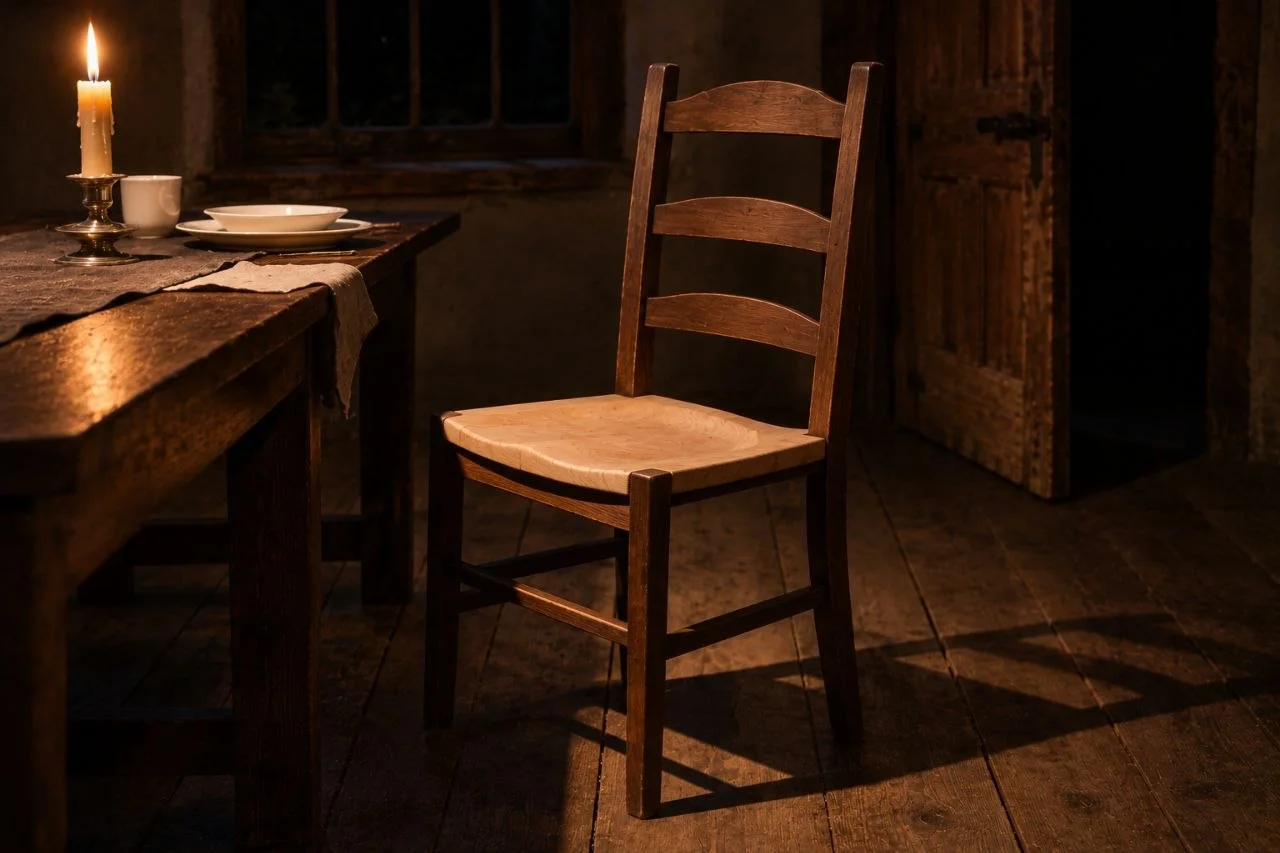
Solid walnut, the same as the box the deck comes in, pegged, with no metal in it anywhere. The seat is left unfinished, because nobody is going to wear it in.
Before the meal you pull it out from the table a little way, the way you would for someone. That is all it does.
- Wood
- Walnut, oiled, except the seat
- Joints
- Pegged
- Sat in
- Never. We check.
Hallows IIIBeeswax
The candle.
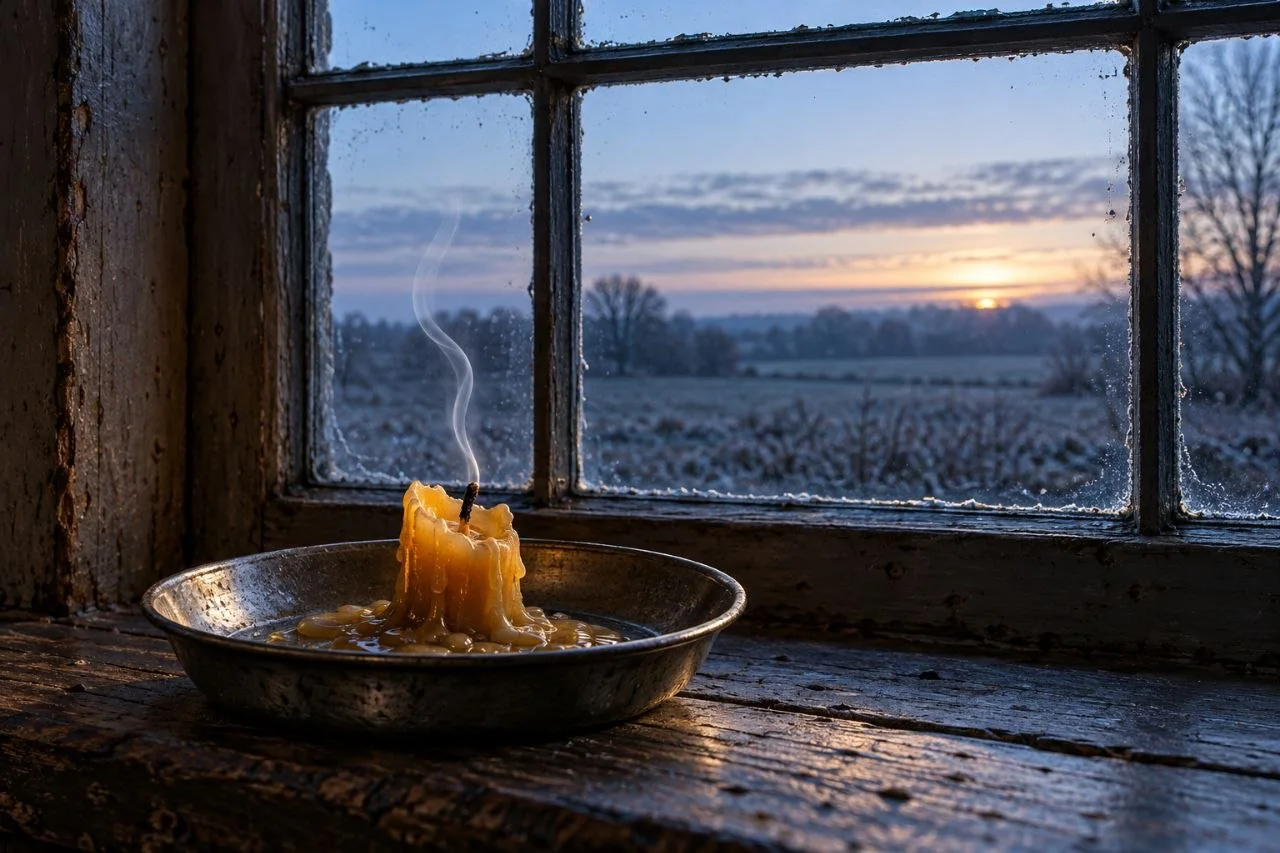
In Ireland a candle was lit on this night for the dead. Ours is beeswax, and it is poured to the length of your night. Tell us your latitude and it will burn from sunset on the thirty-first of October to sunrise on the first of November, where you live, and go out by itself when it is light.
Fourteen hours, twenty-four minutes.
About 115 grams of wax.
- Wax
- Pure beeswax, with a cotton wick
- Count
- One at each place, and one for the window
- Burns
- About eight grams an hour
Hallows IVBronze
The lantern.
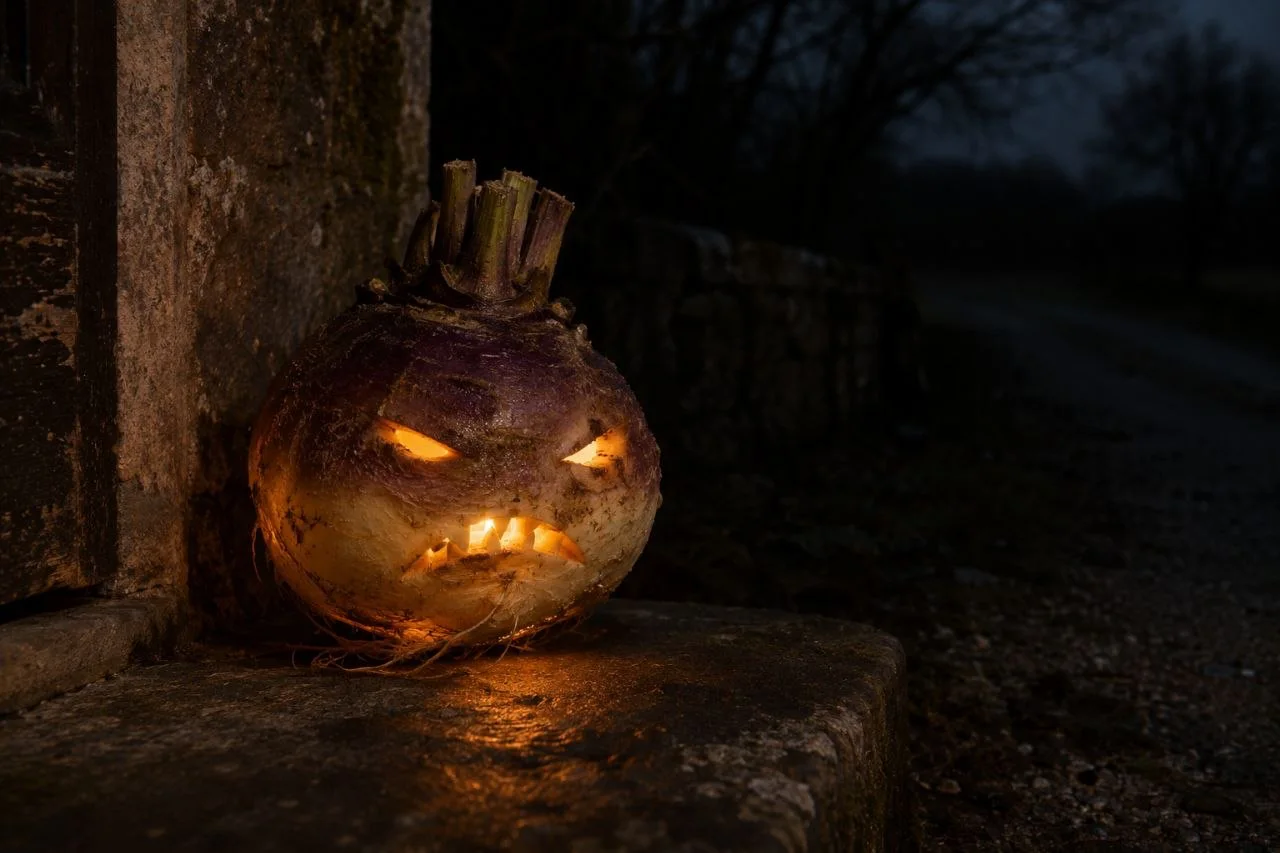
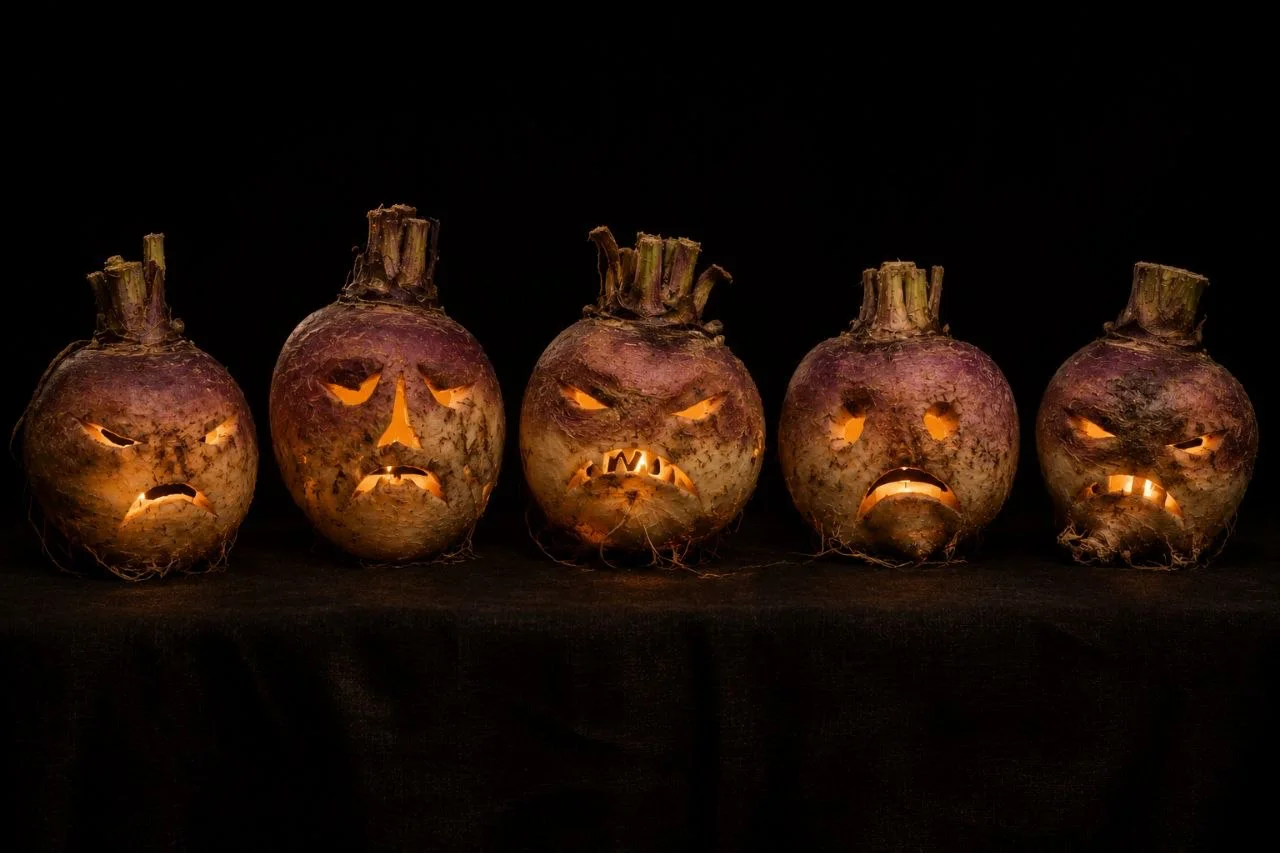
The jack-o’-lantern was a turnip. They were carved for this night in Ireland and Scotland, and the pumpkin came later, in America, because it is easier.
In 1943 a schoolteacher in Fintown, County Donegal, gave one to the National Museum of Ireland. It was about forty years old and falling apart, so the museum’s artist, Eileen Barnes, cast it in plaster and painted it. It has a pinched, angry face. It is in County Mayo now, and you should look it up in the morning, not tonight.
We cast ours in bronze. Somebody carves a real turnip, in one sitting, with a small knife, without practice. A turnip is hard to carve, which is why the faces come out like that. It goes into the mold and is burned out of it, and the bronze goes in where it was. So there is never a second one of any face, and the turnip is gone.
The patina is worked to the turnip’s own colors, down to the roots. From the road you would not know. You would know if you picked it up.
It holds the candle. It goes outside on the step, facing the road, because not everybody who is out tonight is yours.
- Metal
- Bronze, cast from the turnip
- Size
- That of a turnip
- Weight
- About three kilos
- Patina
- Violet at the top, cream below, roots and all
- Face
- Whatever it turns out to be. We don’t take requests.
Hallows VButter, saffron
The cakes.
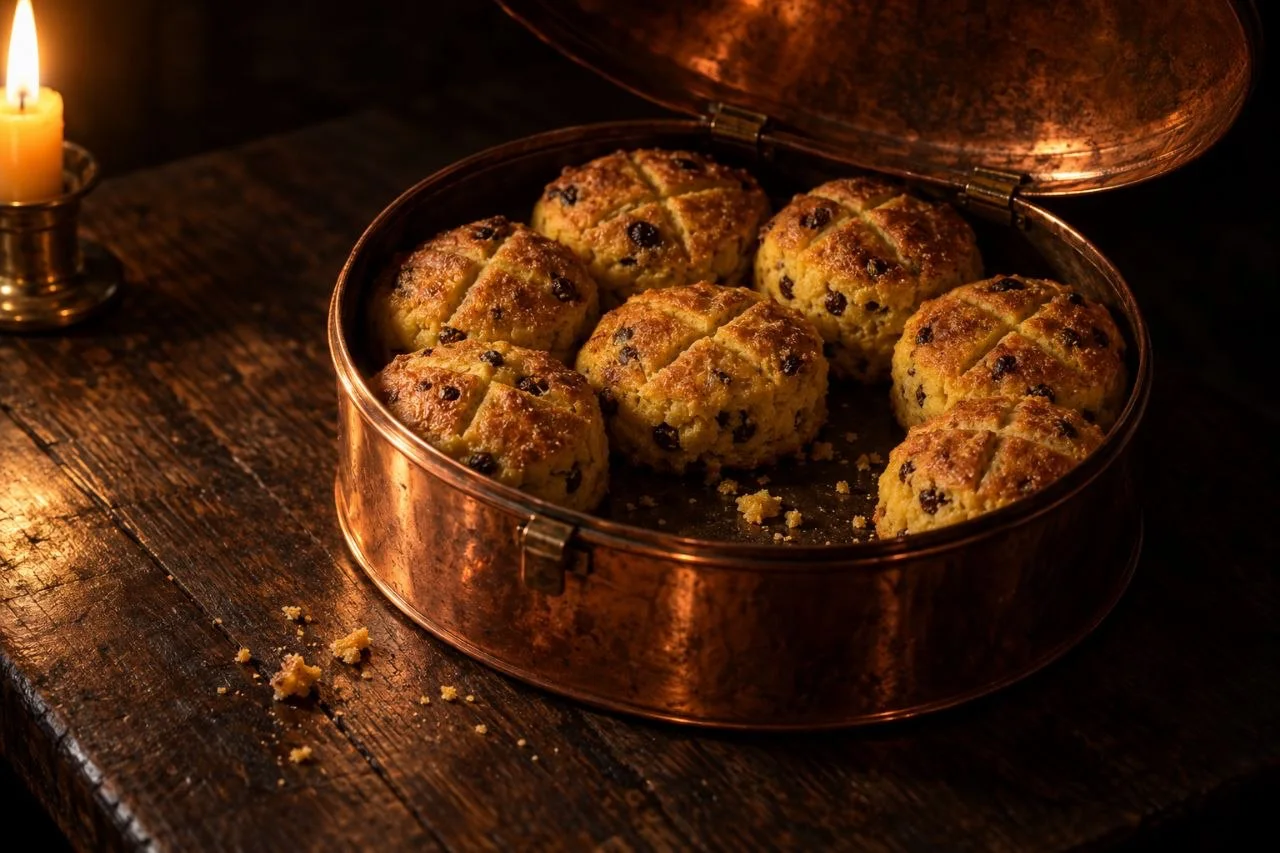
This is what trick-or-treating was. For hundreds of years the poor came to the door at Hallowtide and you gave them a small round spiced cake, and they promised to pray for your dead. Every cake, people said, was one soul out of purgatory.
So this is what you give out at the door. Forty-eight to a tin, in six layers of eight: butter, saffron, allspice, currants, and a cross cut in the top. The tin comes in the cracker’s three finishes.
Keep count. You will want to know how many you got out.
- CopperFox
- SlateShark
- WhiteArctic
- Cakes
- Forty-eight, in six layers, baked the week you need them
- Tin
- Tinned steel, hinged, kept for next year
- Keep
- Two weeks. They are not meant to last.
The rest of the house
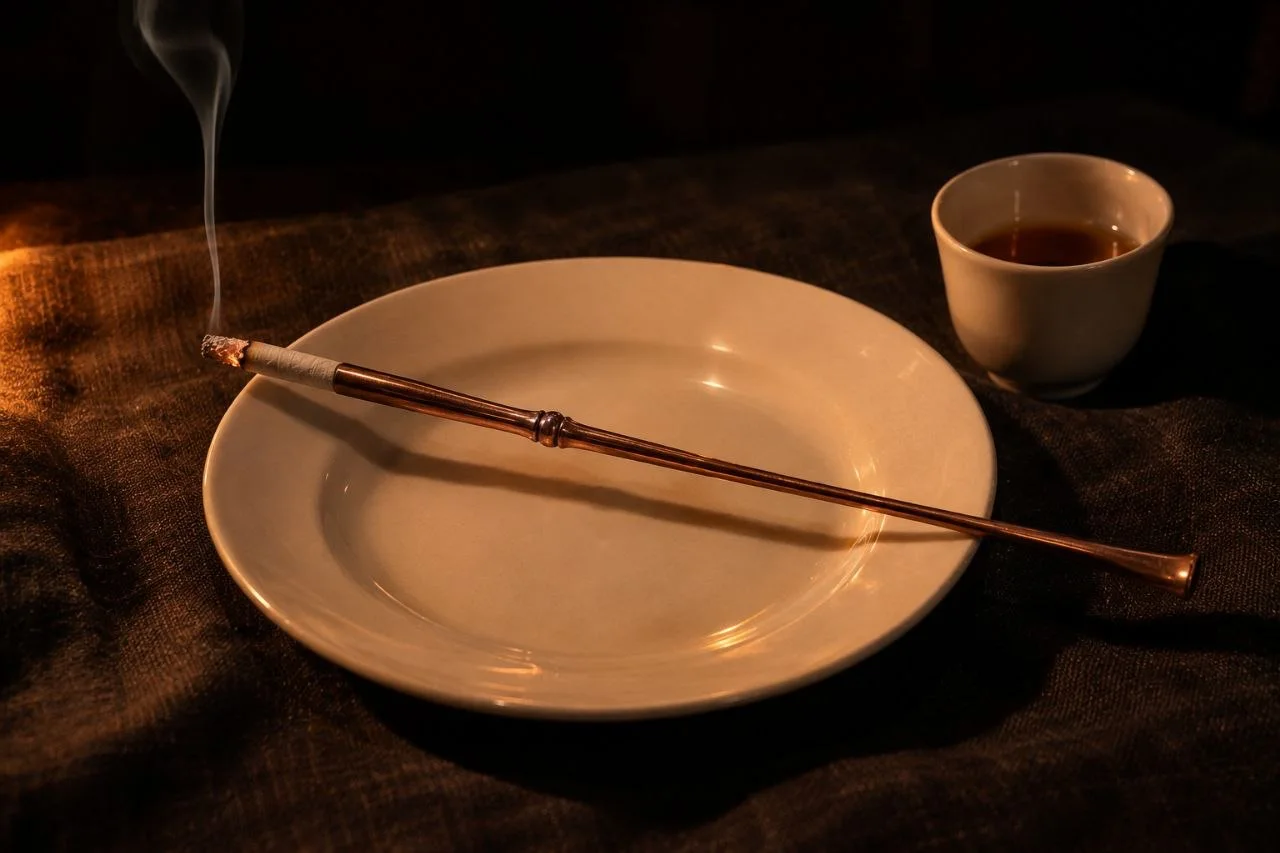
What else goes on the table.

Is it allowed?
We asked.
Every tradition already has its own night for this, and most of them are better than ours.
- Judaism
- Halloween is not yours, and you do not lay a place for anyone. You have the yahrzeit: one candle, twenty-four hours, every year on the date. We will pour it for twenty-four.
- Catholicism
- This is your night, the eve of All Saints, with All Souls to follow. Praying for the dead is doctrine (Catechism 958). Conjuring them up is not (2116). So you may lay the place. You may not ask it anything.
- Orthodox Christianity
- Your days are the Soul Saturdays, and your food is kollyva: boiled wheat, for the grain that goes into the ground. Use the plate for that, on the Saturday.
- Islam
- No place at the table. The dead do not come back for dinner. Visit the grave, because it reminds you of death (Muslim 976), pray for them, and give in their name.
- Protestantism
- You have your own thirty-first of October. Thesis 27 objects to the claim that a soul flies out of purgatory when a coin clinks in the chest, so leave out the cakes. The rest is only a memorial. Show us the verse.
- Hinduism
- You have been doing this for longer: Pitru Paksha, a fortnight each autumn of feeding your ancestors by name, with rice for the crows. Bone china is made with cattle bone, so yours will be plain porcelain.
- Buddhism
- Obon and Ullambana: food for the hungry ghosts, a lantern to bring your own home, and a lantern on the water to send them back. Send them back. Everybody forgets that part.